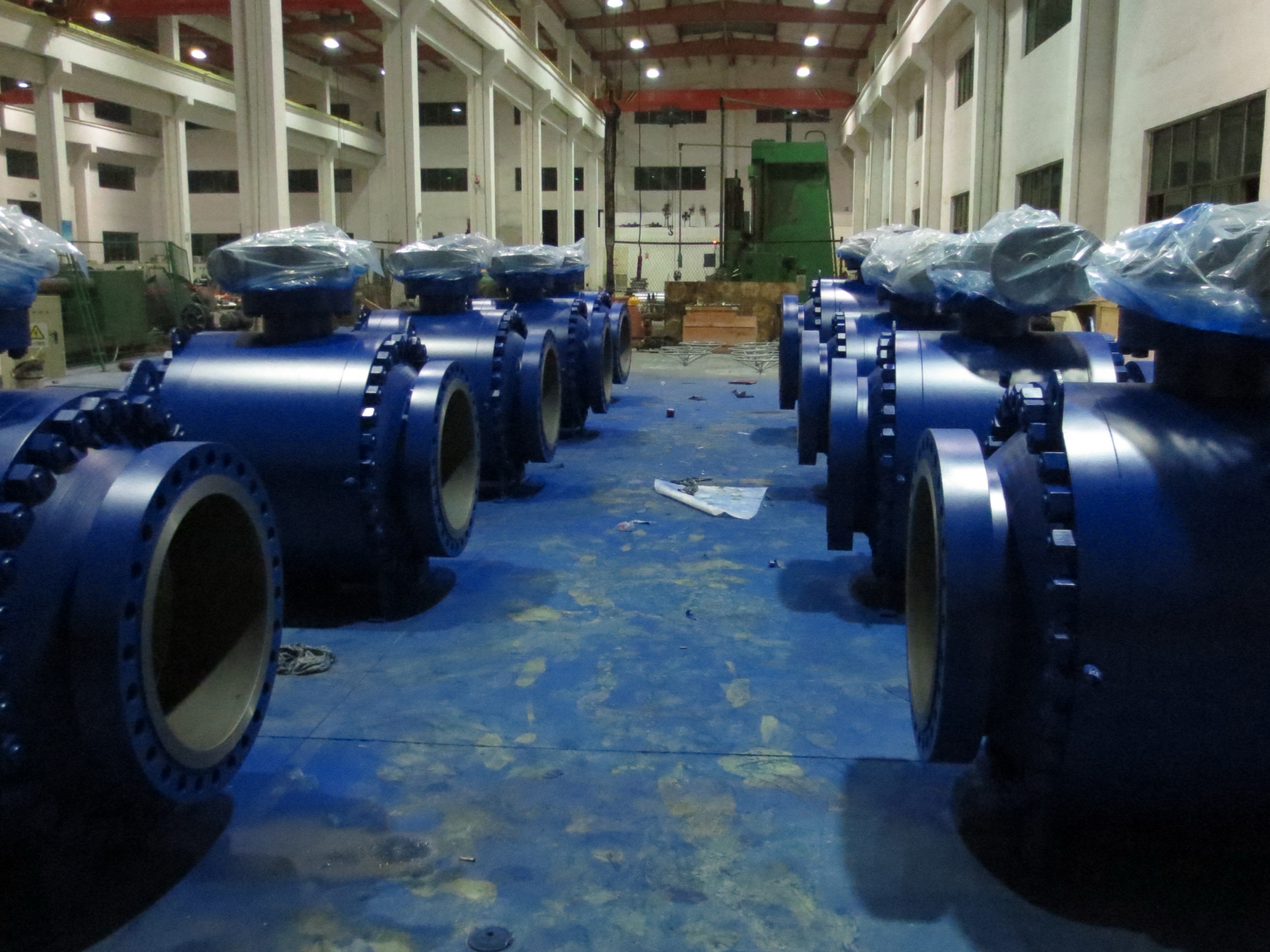
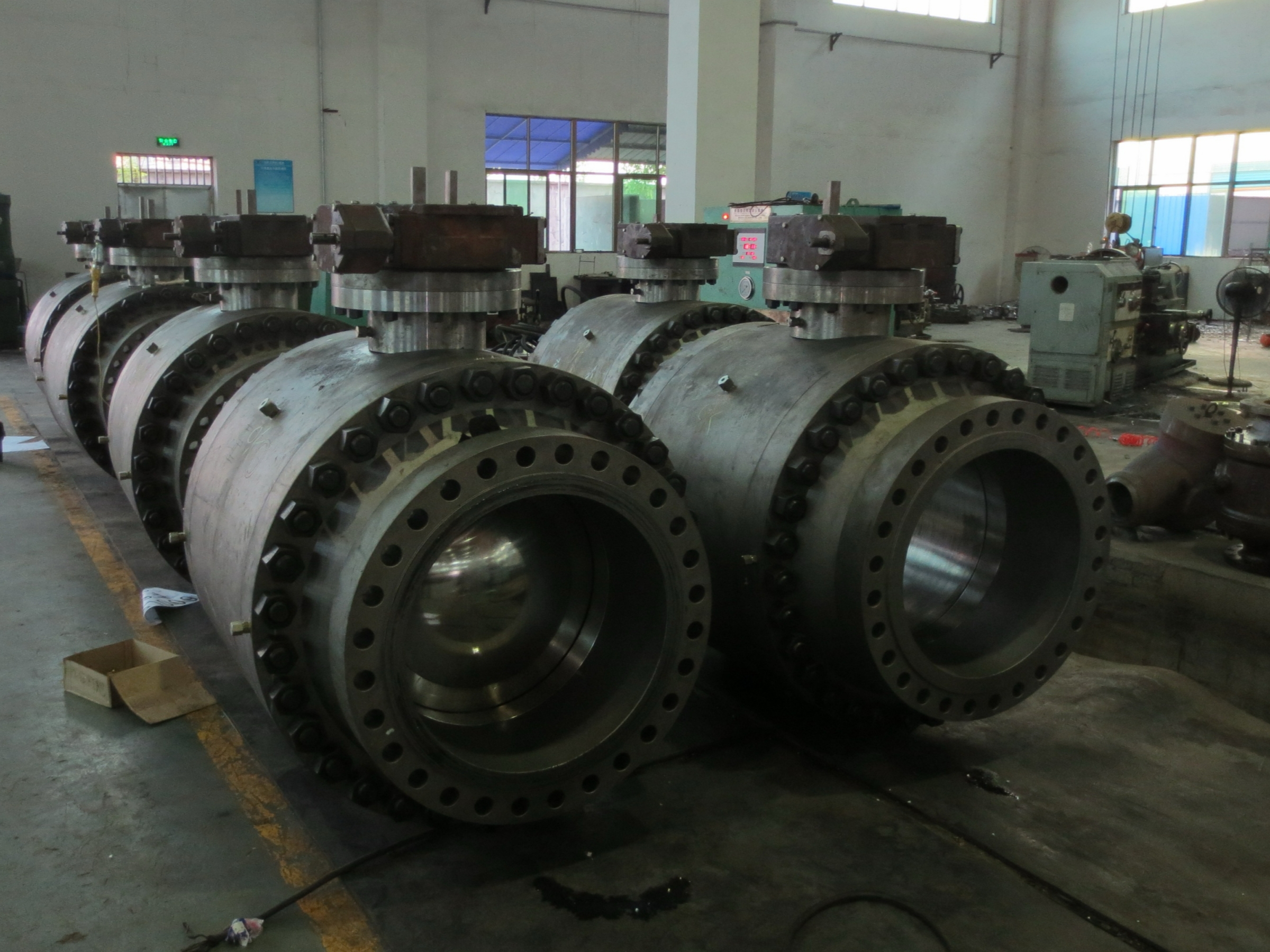
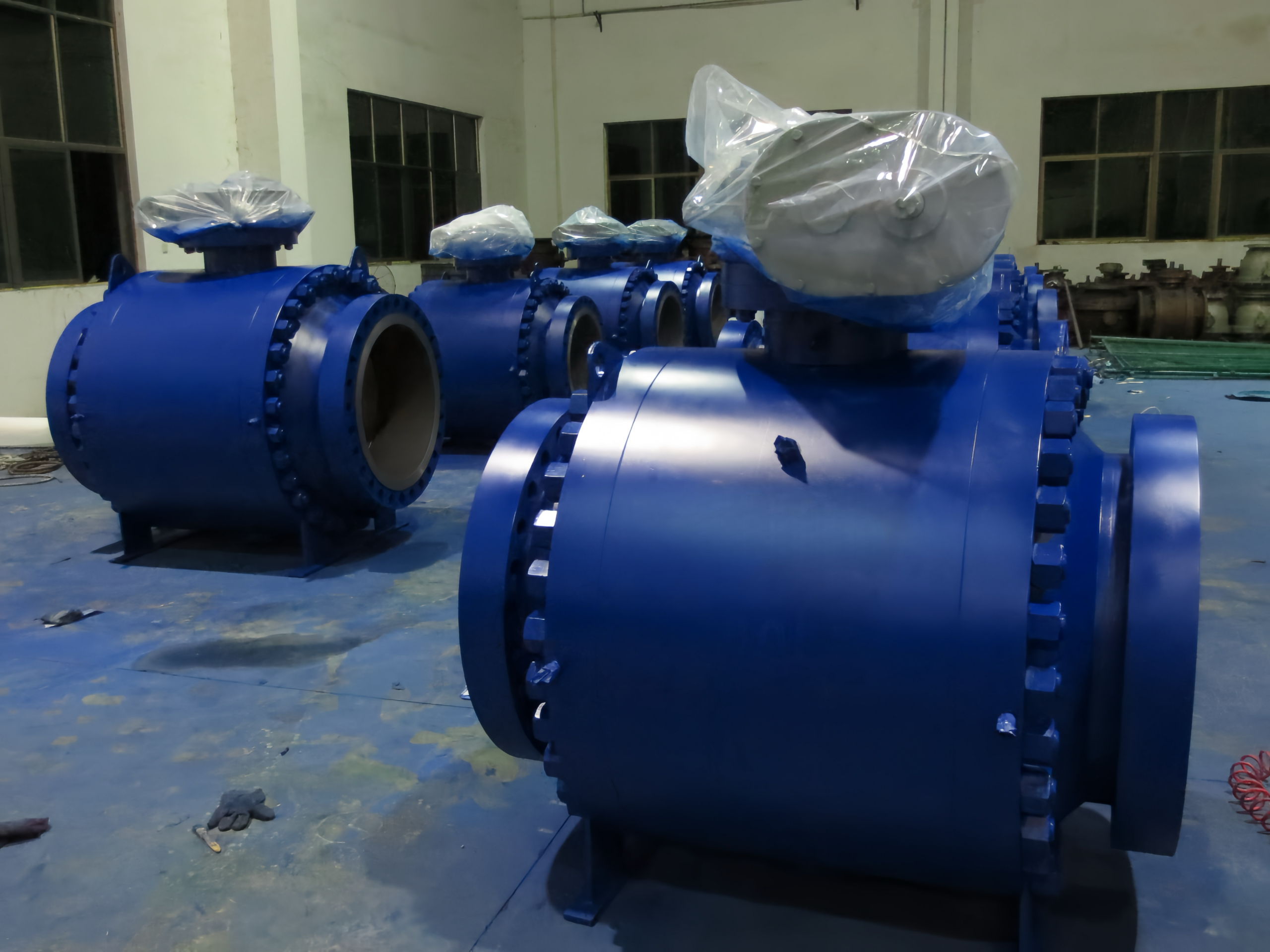
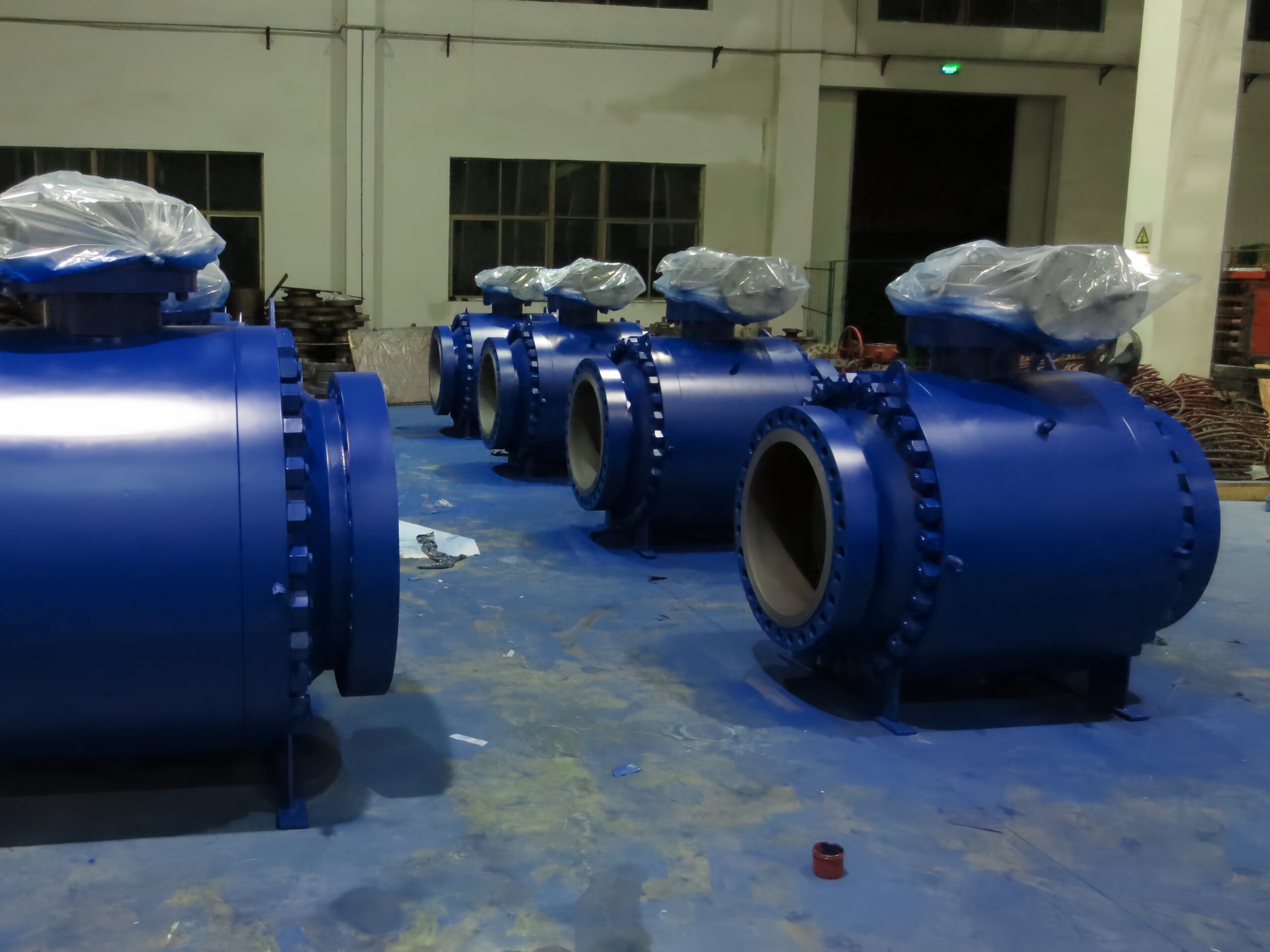
3-Piece Trunnion Ball Valve ASTM A694 F60 Open Die Forged— 42″ 600LB RF
Description
3-Piece Trunnion Ball Valve — 42″ 600LB ASTM A694 F60 Open Die Forged
TECHNICAL DATA SHEET
1. General Description
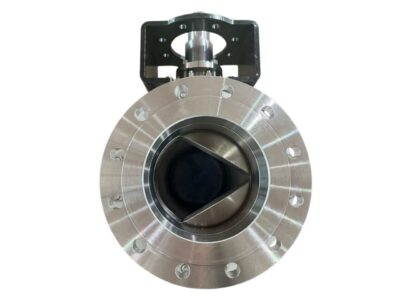
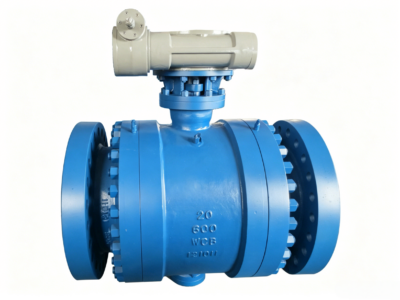
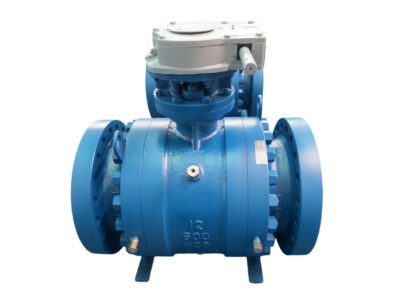
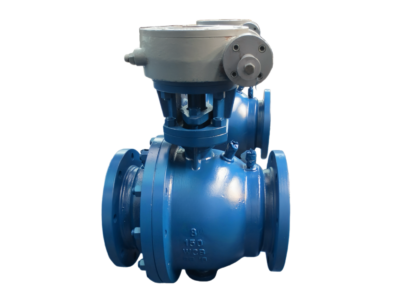
This is a 42-inch (DN 1050), Class 600, three-piece side-entry, trunnion-mounted ball valve. The body, bonnet and end caps are open die forged from ASTM A694 F60 high-strength low-alloy steel, a material specifically designed for high-pressure transmission service with excellent strength and low-temperature toughness. The trunnion-mounted ball design transfers thrust loads to the trunnion bearings, significantly reducing operating torque. The three-piece side-entry construction allows the center section to be removed for in-line maintenance without dismounting the pipeline flanges. Full bore design ensures piggability, while anti-static and fire-safe features comply with pipeline valve standards.
2. Applicable Standards & Codes
Item Standard / Code
Design & Manufacture API 6D / ASME B16.34
Pressure-Temperature Ratings ASME B16.34
Face-to-Face ASME B16.10
Flanged Ends ASME B16.47 (NPS 26 & above)
Fire-safe Design API 607 / ISO 10497
Inspection & Testing API 598 / API 6D
Forging Material ASTM A694 F60 (Open Die Forged)
Open Die Forging Manufacture & Inspection API Spec 20B or GB/T 37775 / GB/T 25136
3. Main Technical Parameters
Parameter Description
Nominal Size 42 inch (DN 1050)
Pressure Class Class 600
Body/Bonnet/End Cap Material ASTM A694 F60 (Open Die Forged)
Ball / Stem Material ASTM A182 F316 (Stainless Steel)
Seat Material RPTFE / Devlon / PEEK etc.
End Connection Raised Face Flange (RF) per ASME B16.47 (Series A or B)
Configuration 3-piece side-entry, trunnion-mounted, bolted bonnet
Ball Bore Full bore (standard) / Reduced bore (optional)
Operation Heavy-duty worm gearbox (standard); electric / pneumatic / hydraulic actuator optional
Flow Direction Bi-directional
Service Media Natural gas, oil, water, steam, etc.
Operating Temperature Range -29 °C to +200 °C (seat material dependent)
Shell Test Pressure (ambient) 15.3 MPa.g (2220 psi)
High-Pressure Seat Test (ambient) 11.2 MPa.g (1625 psi)
Low-Pressure Seat Test 0.5 – 0.7 MPa (air or nitrogen)
Leakage Class API 598 Zero Leakage
4. Typical Bill of Materials
No. Part Name Material Remarks
1 Body ASTM A694 F60 Open Die Forged, Normalized & Tempered or Quenched & Tempered
2 Bonnet ASTM A694 F60 Open Die Forged
3 End Caps (L/R) ASTM A694 F60 Open Die Forged
4 Ball ASTM A182 F316 Optional hard chrome plating for wear resistance
5 Seat Ring RPTFE / Devlon / PEEK Selected based on media & temperature
6 Seat Support / Holder ASTM A182 F316 Spring-loaded
7 Stem ASTM A182 F316 Anti-blowout (integral shoulder)
8 Trunnion Bearings 316SS + PTFE Lining Self-lubricated
9 Stem Bearings 316SS + PTFE Lining Low friction
10 Springs 17-7PH / Inconel Low-pressure sealing preload
11 Studs / Bolts ASTM A193 B7 High-strength alloy steel
12 Nuts ASTM A194 2H Standard heavy hex nuts
13 Packing / Gasket Flexible Graphite / PTFE Low-emission packing optional (ISO 15848)
14 Gearbox Cast steel / Ductile iron housing With mechanical stops
5. ASTM A694 F60 Chemical Composition
Element C Mn P S Si
Requirement ≤0.265 ≤1.640 ≤0.030 ≤0.030 0.10-0.40
Mechanical Properties: ASTM A694 F60 belongs to the HSLA steel family, specifically classified as Low Carbon Bainitic Steels (LCBS). In the tempered condition, it exhibits an almost optimal combination of strength and toughness, as well as good weldability.
Property Yield Strength Rp0.2 Tensile Strength Rm Elongation A Reduction of Area Z
Requirement ≥415 MPa (60 ksi) ≥520 MPa (75 ksi) ≥20% ≥30%
6. Approximate Dimensions & Weight
Based on 42″ Class 600, full bore, RF flanged, gearbox operated. Final certified drawing governs.
Specification Unit Value
Nominal Size inch (mm) 42 (DN 1050)
Face-to-Face (L) mm Per ASME B16.10
Flange OD (Class 600, 42″ B16.47) inch (mm) 55.25″ (approx. 1403 mm)
Flange Bolt Circle Diameter inch (mm) 50.50″ (approx. 1283 mm)
Min. Flange Thickness inch (mm) 6.62″ (approx. 168 mm)
Approx. Total Weight kg (lbs) ~12,000 kg (~26,400 lbs)
Note: For 42″ flanges exceeding ASME B16.5 range (upper limit 24″), ASME B16.47 applies. Two series are available: Series A (heavier, thicker) and Series B (lighter, more compact). Dimensions may vary slightly depending on the selected series.
7. Design & Manufacturing Features
Open Die Forged Body: The body, bonnet, and end caps are all manufactured via the open die forging process, ensuring complete grain flow and dense microstructure without casting defects, providing superior reliability under high-pressure, high-temperature, and low-temperature conditions. Manufacture and inspection may follow API Spec 20B Open Die Shaped Forgings for Use in the Petroleum and Natural Gas Industries.
ASTM A694 F60 High-Strength Low-Alloy Steel: Specifically designed for high-pressure transmission pipelines. High yield strength (≥415 MPa); classified as Low Carbon Bainitic Steel (LCBS) within the HSLA family. In the tempered condition, offers an excellent combination of high strength, outstanding low-temperature toughness, and good weldability.
3-Piece Side-Entry Construction: The center body section can be removed independently for servicing seats and seals without removing pipeline flanges, significantly reducing maintenance costs and downtime.
Trunnion-Mounted Ball: The ball is fixed by upper and lower trunnion bearings that absorb all thrust loads from line pressure, minimizing stress on the stem and seals. This results in low operating torque, making it ideal for extra-large-bore and high-pressure differential applications.
Double Block & Bleed (DBB) : Standard with dual seats and body cavity vent/drain valves. When the ball is in the closed position, both seats seal independently, allowing cavity depressurization and seal integrity verification.
Anti-Blowout Stem: The stem is internally loaded with an integral shoulder, preventing stem ejection even if the packing gland is accidentally loosened, in full compliance with API 6D requirements.
Fire-Safe Design (Optional) : The seat rings incorporate a metal secondary sealing feature. In the event of a fire that destroys the soft seat inserts, the seat holders move under line pressure to create a metal-to-metal seal against the ball, satisfying API 607 / ISO 10497 requirements.
Anti-Static Device: Conductive springs and balls are installed between the stem and ball, and between the stem and body, to dissipate static electricity to the pipeline grounding system, meeting API 6D requirements and ensuring safety in flammable media service.
Low-Maintenance Packing System: V-ring live-loaded packing automatically self-adjusts for long service life and low friction. Low-emission packing design per ISO 15848 is available as an option.
8. Pressure-Temperature Ratings Reference
*Note: ASTM A694 F60 is primarily intended for high-pressure transmission service per API 6D / ASME B16.34. The following reference values are for Class 600 rated working pressure (exact values per the latest edition of ASME B16.34). PTFE seats are typically limited to 200 °C; for higher temperatures, select PEEK, Devlon, or metal seats.*
Service Temperature (°C) Max. Allowable Working Pressure (MPa.g)
-29 ~ 38 10.21
100 8.18
150 7.25
200 6.48
9. Inspection, Testing & Documentation
100% pressure tested per API 598 / API 6D: Shell (1.5× rated), high-pressure seat (1.1× rated), optional low-pressure air seat test.
Forging chemical composition and mechanical property reports provided per ASTM A694. Open die forgings may be inspected and documented per API Spec 20B.
Optional NDE: 100% Ultrasonic Examination (UT), Liquid Penetrant Examination (PT), Magnetic Particle Examination (MT).
Standard Documentation Package: Material test certificates, pressure test reports, certificate of conformance, and installation & maintenance manual. EN 10204 Type 3.1 or 3.2 certificates available upon request.
Carbon steel body surfaces painted with anti-rust coating; flange raised faces coated with rust-preventive oil and fitted with protective covers.
10. Typical Applications
Oil & gas long-distance high-pressure transmission line block valves
Natural gas high-pressure gathering and processing facilities
Large pump station discharge isolation valves
Compressor station and metering station pipelines
Offshore platforms and FPSO high-pressure service
11. Additional Selection Notes
Seat Material: Standard RPTFE for -29 ~ 200 °C; Devlon recommended for abrasive media or high-pressure differentials; PEEK or metal seats for higher temperatures.
Bore Type: Full bore is standard for pigging requirements. Reduced bore may be offered for cost reduction where pigging is not required.
Flange Series: For 42″ flanges exceeding ASME B16.5 scope, ASME B16.47 applies. Please specify Series A (heavier, higher load capacity) or Series B (lighter, more economical).
Actuation: Heavy-duty worm gearbox is standard. For electric, pneumatic, or hydraulic actuation, please provide control methodology, required stroking time, area classification, and torque requirements.
Bypass System: A bypass valve is recommended for large-bore high-pressure ball valves to equalize cavity pressure and reduce operating torque.
Cavity Vent/Drain: Standard on trunnion-mounted ball valves, enabling online pressure equalization and cavity drainage.