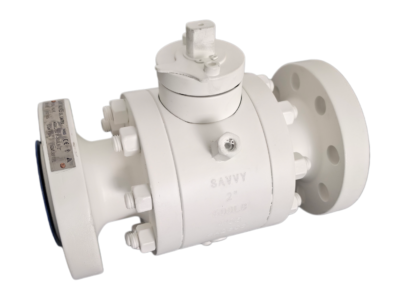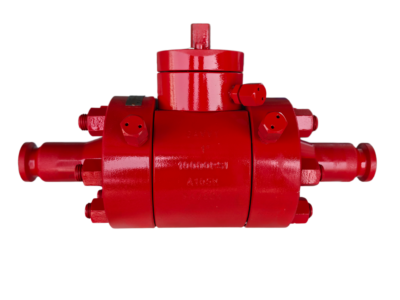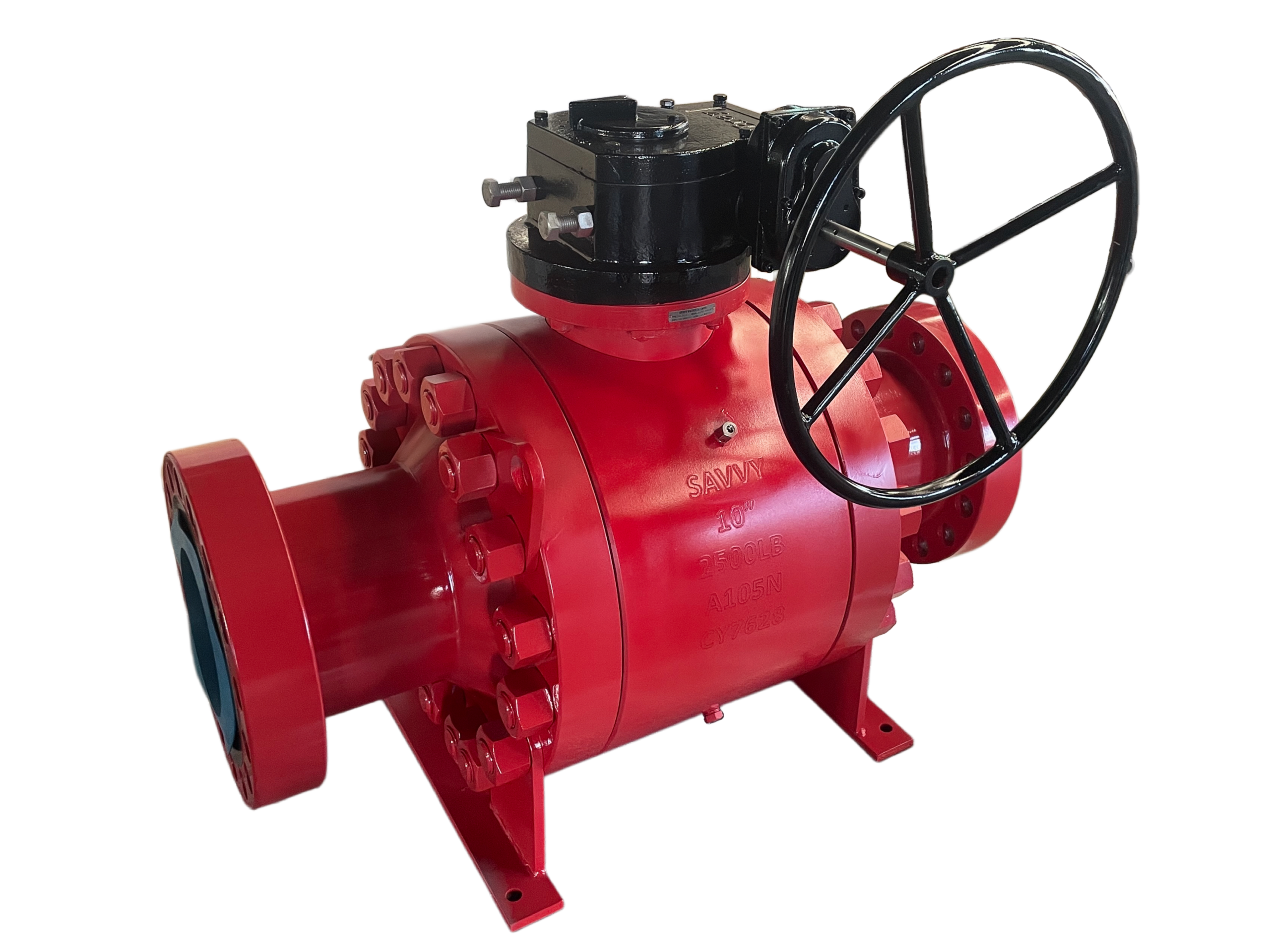
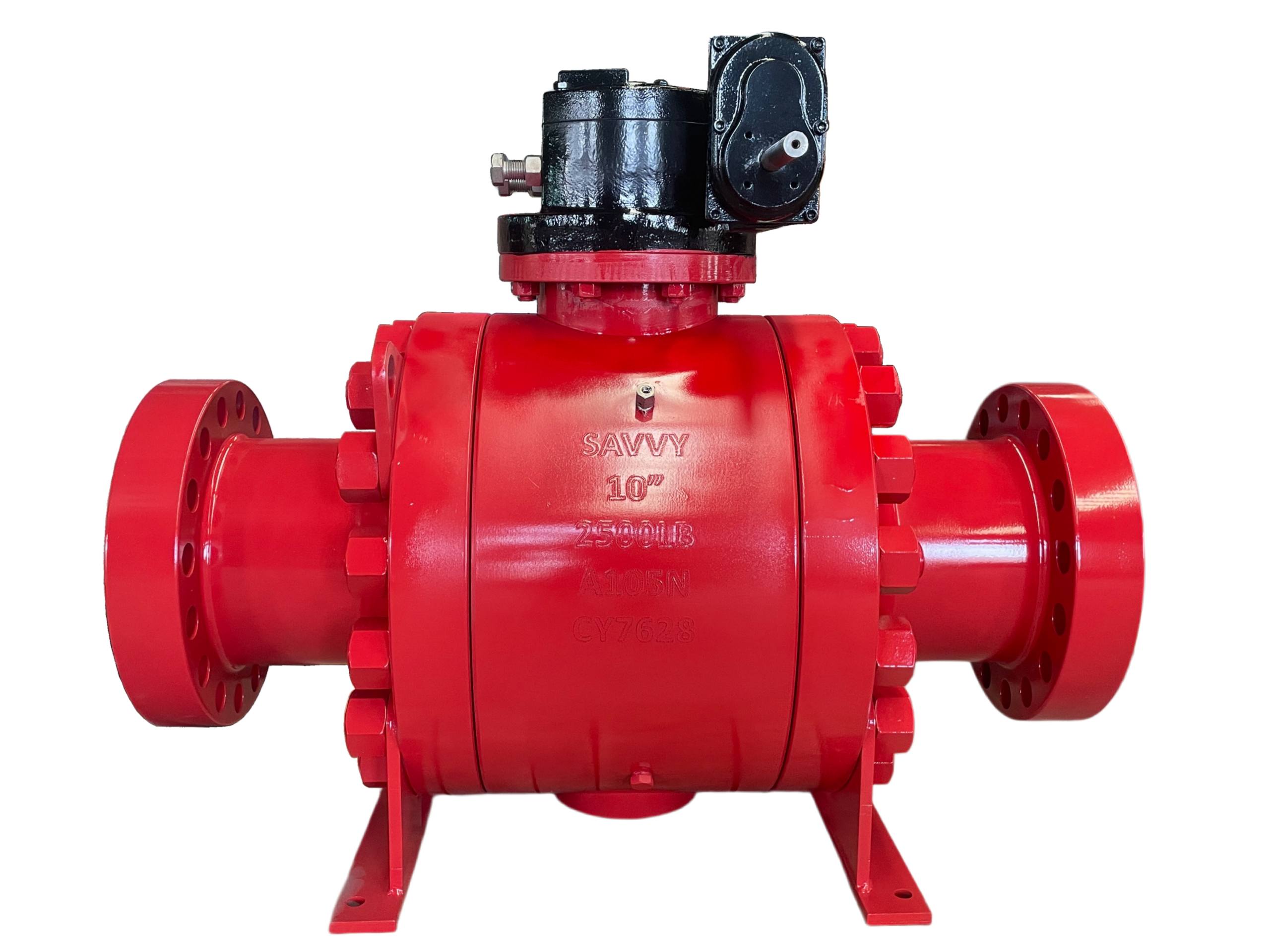
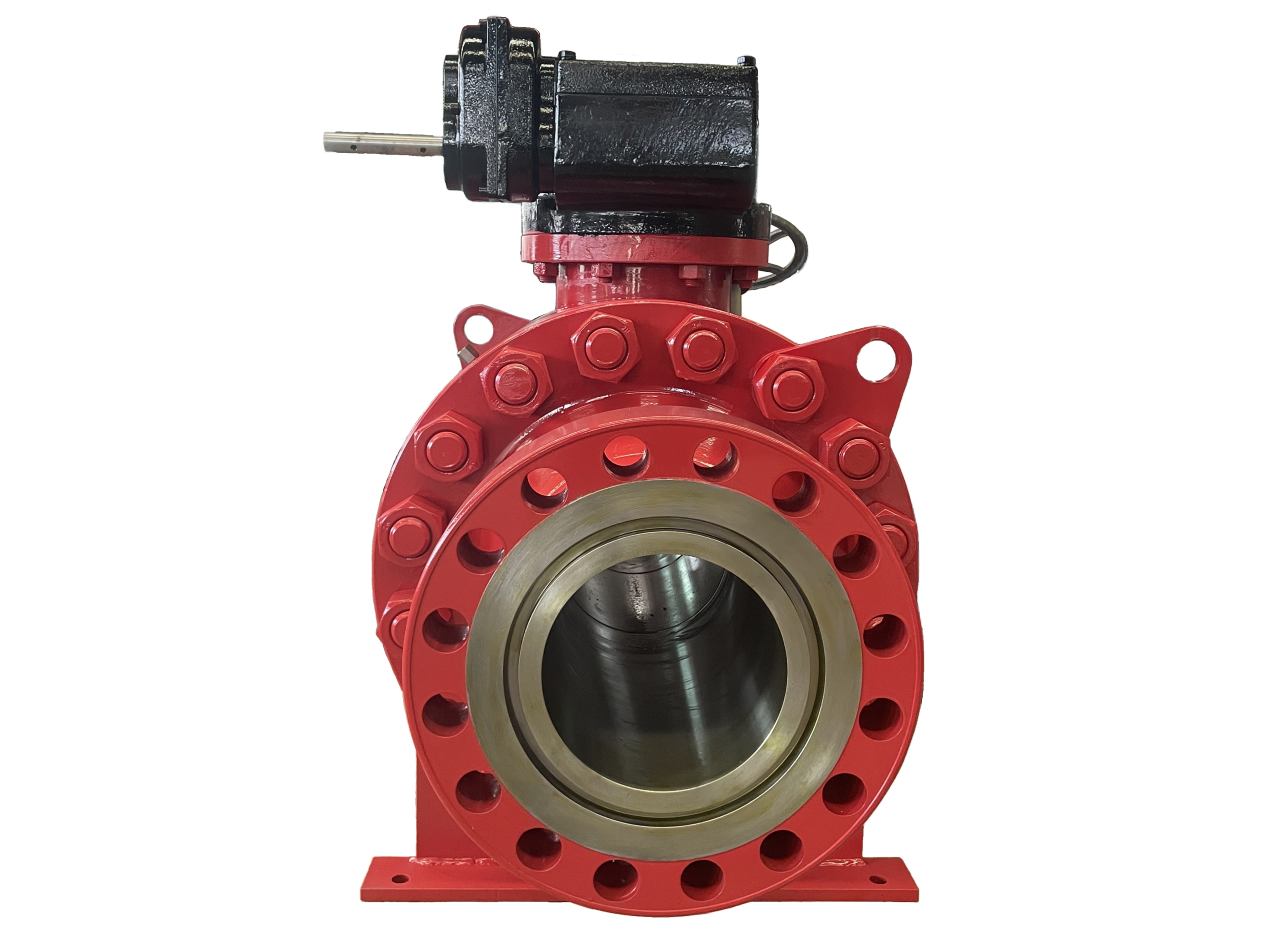
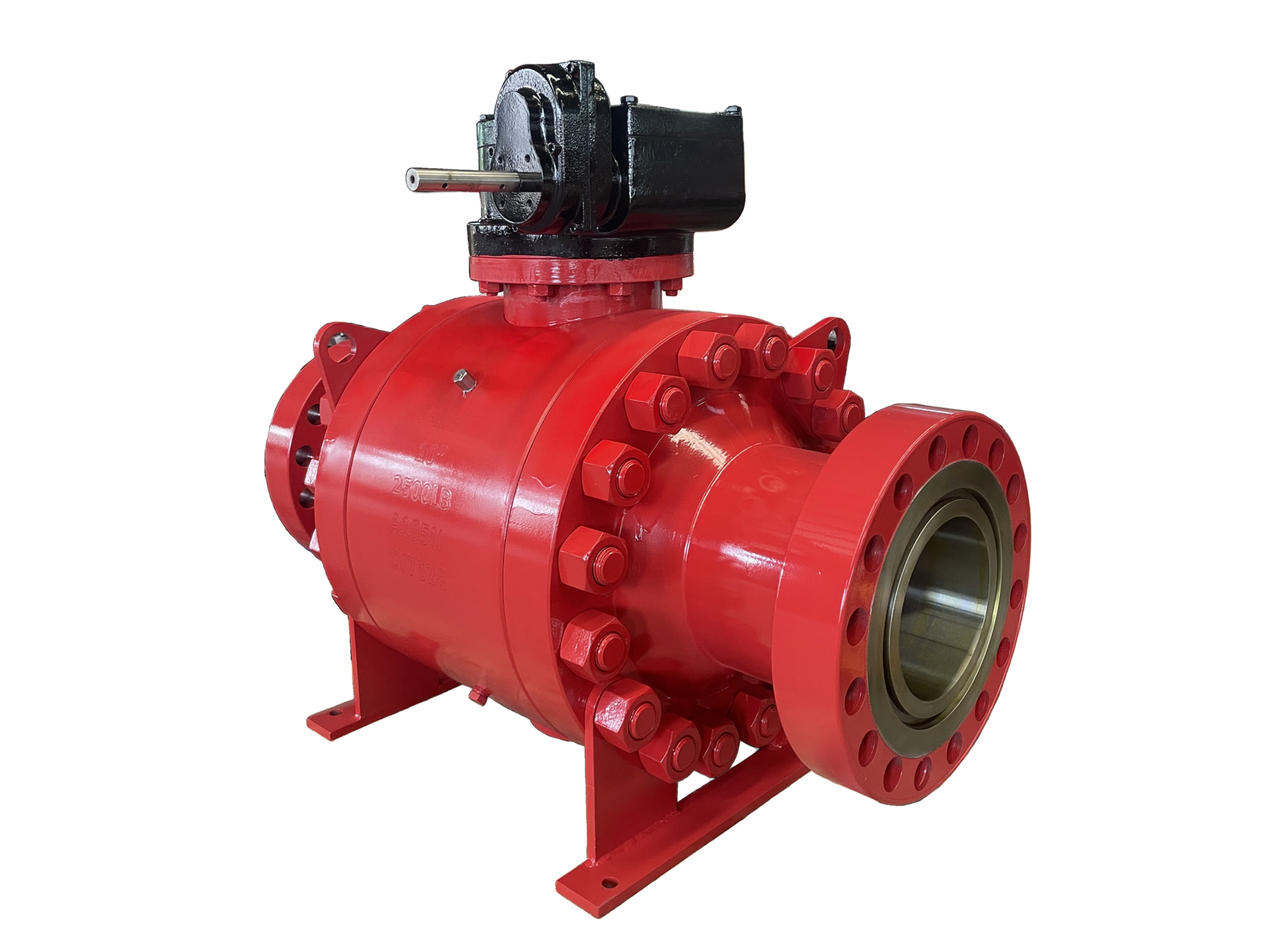
API 6A Trunnion Ball Valves-10″ 6000PSI SPO flange
Description
TECHNICAL DATA SHEET
API 6A Trunnion-Mounted Ball Valve – 6,000 PSI
Model Example: TBV-6000-3116-RTJ-6A
Nominal Size (Representative): 3-1/8″ | Pressure Rating: 6,000 psi (41.4 MPa)
DOCUMENT CONTROL
| Item | Description |
|---|---|
| Document Type | Technical Data Sheet |
| Valve Type | Trunnion-Mounted Ball Valve, Side-Entry, Forged Construction |
| Design Standard | API 6A / ISO 10423 (21st Edition) |
| Pressure Rating | 6,000 psi (41.4 MPa) |
| End Connection | API 6A Type 6B RTJ Flanged (standard); Buttweld, Hubbed, Clamp optional |
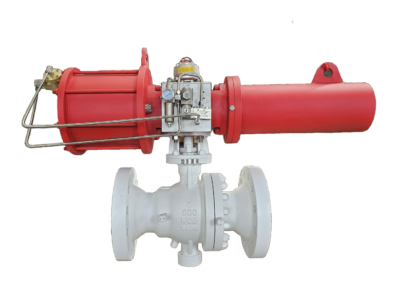
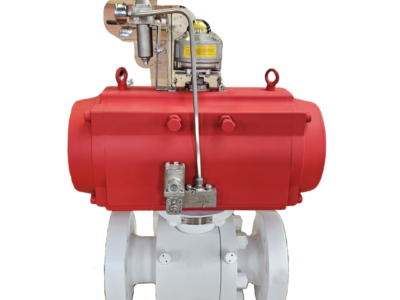
| Operation | Gear Operated (standard); Lever, Pneumatic, Electric, Hydraulic available |
1. GENERAL DESCRIPTION
This data sheet covers the API 6A trunnion-mounted ball valve rated at 6,000 psi. The forged steel, side-entry design is suitable for wellhead equipment, Christmas trees, choke & kill manifolds, production manifolds, and high-pressure isolation in oil & gas service. Trunnion-mounted ball support minimizes torque and ensures bi-directional, bubble-tight sealing from zero differential pressure to full rating.
2. TECHNICAL SPECIFICATIONS
| Parameter | Specification |
|---|---|
| Nominal Bore (Example) | 3-1/8″ (79.4 mm) |
| Available Size Range | 1-13/16″ to 20-1/4″ |
| Pressure Rating | 6,000 psi (available 2,000 – 20,000 psi) |
| Bore Type | Full Bore (standard) / Reduced Bore |
| Body Construction | Two-piece or Three-piece bolted, forged steel |
| Ball Design | Trunnion-mounted (upper & lower trunnions) |
| Seat Design | Spring-assisted, pressure-assisted floating seats; bi-directional |
| Piston Effect | Single Piston Effect (SPE) / Double Piston Effect (DPE) / DBB |
| Flow Direction | Bi-directional (standard) |
| Sealing Class | Soft Seat: Zero Leakage (API 6A Rate A); Metal Seat: FCI 70-2 Class 5/6 |
| Cavity Relief | Automatic – upstream seat relieves at >1.33 × rated pressure |
| Temperature Class | L, N, P, R, S, T, U, V, X, Y (−50 °F to +350 °F / −46 °C to +177 °C) |
| Product Specification Level (PSL) | PSL 1, 2, 3, 3G, 4 |
| Performance Requirement (PR) | PR 1 (standard) / PR 2 (high-cycle) |
| Material Class | AA, BB, CC, DD, EE, FF, HH |
| Fire-Safe | API 6FA / API 607 / BS 6755 Part 2 |
| Sour Service | NACE MR0175 / ISO 15156 (as applicable) |
3. PRESSURE-TEMPERATURE RATINGS
Ratings are per ASME B16.34 for the selected body material and temperature class. Final working pressure shall be verified against the applicable material class and seat material limit. Contact manufacturer for detailed P-T curves.
4. MATERIALS OF CONSTRUCTION
All materials comply with NACE MR0175 when required by PSL and material class.
| Component | Standard Carbon Steel Trim | Corrosion-Resistant / Alloy Options |
|---|---|---|
| Body / Bonnet | AISI 4130, A694 F60/F65, 60K, 75K | 316 SS, Duplex SS, Inconel 625 |
| Ball / Trunnion / Stem | 410 SS / 17-4PH + Nitriding or ENP | Stellite 6 / Tungsten Carbide (HVOF) / Inconel 625 |
| Seat Support Ring | Carbon Steel / Stainless Steel | Stainless Steel + Stellite |
| Seal Ring (Insert) | PTFE, PEEK, Nylon, Devlon | Reinforced PTFE, Metal-to-Metal with Graphite |
| Bearings / Bushings | PTFE composite | Tungsten Carbide coated |
| Stem / Trunnion Seals | NBR, FKM, HNBR | FFKM, PTFE spring-energized lip seals |
| Bonnet Seal | Soft iron / Low carbon steel crush ring | SS304/316 + Graphite |
| Bolting | ASTM A193 B7 / A194 2H (PTFE coated) | A193 B7M/2HM (sour), A193 B8M/8M (SS) |
| External Coating | Epoxy paint | Special offshore coatings |
Material Class Selection Guide (per API 6A)
| Material Class | Service Condition | Typical Body | Typical Trim |
|---|---|---|---|
| AA | General, non-corrosive | 60K/75K, 4130 | Nitrided |
| BB | Slightly corrosive | 60K/75K, 4130 | 410/17-4PH SS |
| CC | Moderately corrosive | 75K, 410 SS | Full SS |
| DD | Sour, non-corrosive | 60K/75K, 4130 | Nitrided |
| EE | Sour, moderately corrosive | 60K/75K, 4130 | 410/17-4PH SS |
| FF | Sour, highly corrosive | F22/F316/F6a | Inconel 625 + Stellite |
| HH | Sour, severely corrosive | Alloy 625 | Alloy 625 |
5. DIMENSIONS & WEIGHTS – 6,000 psi RTJ Flanged End
Representative values. Certified drawings available upon request.
| Nominal Size | Bore (in) | Face-to-Face L (mm) | Center to Top H (mm) | Approx. Weight (kg) |
|---|---|---|---|---|
| 2-1/16″ | 2.09 | 295 | 450 | 70 |
| 2-9/16″ | 2.59 | 333 | 500 | 85 |
| 3-1/8″ | 3.22 | 359 | 550 | 120 |
| 4-1/16″ | 4.09 | 400 | 620 | 180 |
Gear operator standard for ≥4″; lever for smaller sizes. Face-to-face per ASME B16.10 or manufacturer’s standard.
6. FLANGE CONNECTION DATA (3-1/8″ 6,000 psi representative)
| Parameter | Specification |
|---|---|
| Flange Type | API 6A Type 6B, Raised Face Ring Joint (RTJ) |
| Gasket | R or RX (per API 6A) |
| Material | Forged carbon/alloy steel (60K/75K) or Stainless Steel |
7. TESTING & INSPECTION
| Test | Medium | Pressure | Standard |
|---|---|---|---|
| Shell Hydrostatic | Water | 9,000 psi (1.5 × WP) | API 6A |
| Seat Hydrostatic (both dir.) | Water | 6,600 psi (1.1 × WP) | API 6A |
| Seat Gas Test | Air/N₂ | 0.55–1.1 MPa (low) & max. rated | API 6A |
| DBB Test | Water/Gas | Per API 6A | API 6A |
| Fire Test | – | Per API 6FA / 607 | API 6FA/607 |
| NDE (per PSL) | – | MPI, LPI, RT | API 6A |
| Visual & Dimensional | – | – | MSS SP-55, ASME B16.10 |
| Drift Test | – | – | API 6A |
Hold time: 15 min minimum. PSL 3G/4 include witnessed tests and extended holds. Documentation per EN 10204 3.1/3.2.
8. DESIGN FEATURES
-
Trunnion-Mounted Ball: Fixed upper/lower trunnions absorb thrust, minimize deformation and reduce torque.
-
Full Through-Conduit Bore: Unobstructed flow, piggable, low pressure drop.
-
Double Block & Bleed (DBB): Independent seats seal in both directions; cavity bleed verification.
-
Spring-Assisted Seats: Ensure tightness from zero differential pressure to full rating.
-
Anti-Static: Spring-loaded contacts provide continuity ≤10 Ω.
-
Fire-Safe: API 6FA/607 certified; secondary metal sealing after fire.
-
Blowout-Proof Stem: Integral shoulder prevents ejection.
-
Emergency Sealant Injection: Seats and stem can be re-lubricated under pressure.
-
Automatic Cavity Relief: Upstream seat relieves over-pressure due to thermal expansion.
-
Double Piston Effect (DPE) Option: Both seats pressure-energized for critical isolation.
9. ACTUATOR MOUNTING
-
ISO 5211 top flange integrated for direct actuator mounting.
-
Stem machined with keyway or square.
-
Available actuators: Manual gear/lever, Pneumatic (double-acting/spring-return), Electric, Hydraulic.
-
Accessories: Limit switches, solenoid valves, positioners, gearboxes, partial-stroke testing.
-
Manual override (handwheel/gear) available.
10. ORDERING INFORMATION
When ordering, specify:
-
Nominal Size & Pressure Rating (e.g., 3-1/8″, 6,000 psi)
-
Material Class (AA to HH) & Temperature Class
-
PSL / PR Level (e.g., PSL 3G, PR 1)
-
Bore Type (Full/Reduced)
-
End Connection (RTJ, BW, Hub, Clamp)
-
Seat Type (Soft: PTFE/PEEK/Devlon; Metal: STL/TCC)
-
Piston Effect (SPE, DPE, DBB)
-
Operation (Manual, Pneumatic, Electric, Hydraulic) with control details
-
Fire-Safe / Fugitive Emission Certification (Yes/No)
-
NACE MR0175 Required (Yes/No)
-
Special coatings, documentation level (EN 10204 3.1/3.2)
11. DISCLAIMER
This technical data sheet is for reference and selection purposes based on API 6A requirements and standard industry practice. Exact dimensions, weights, ratings, and material certifications must be verified against the manufacturer’s certified documentation and approved drawings prior to procurement or installation.