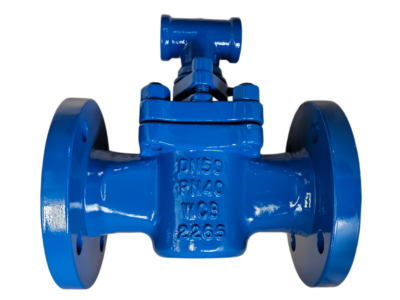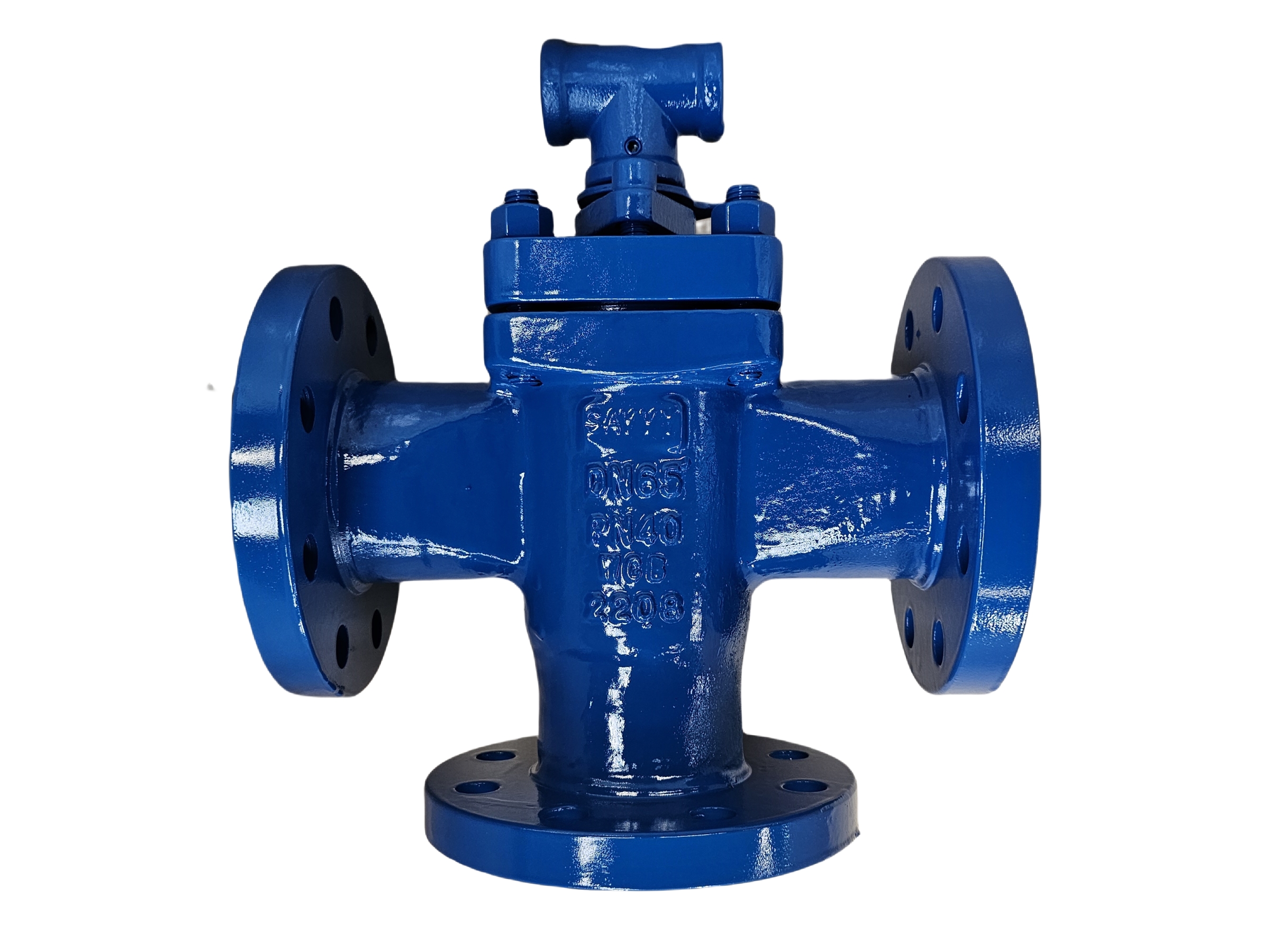
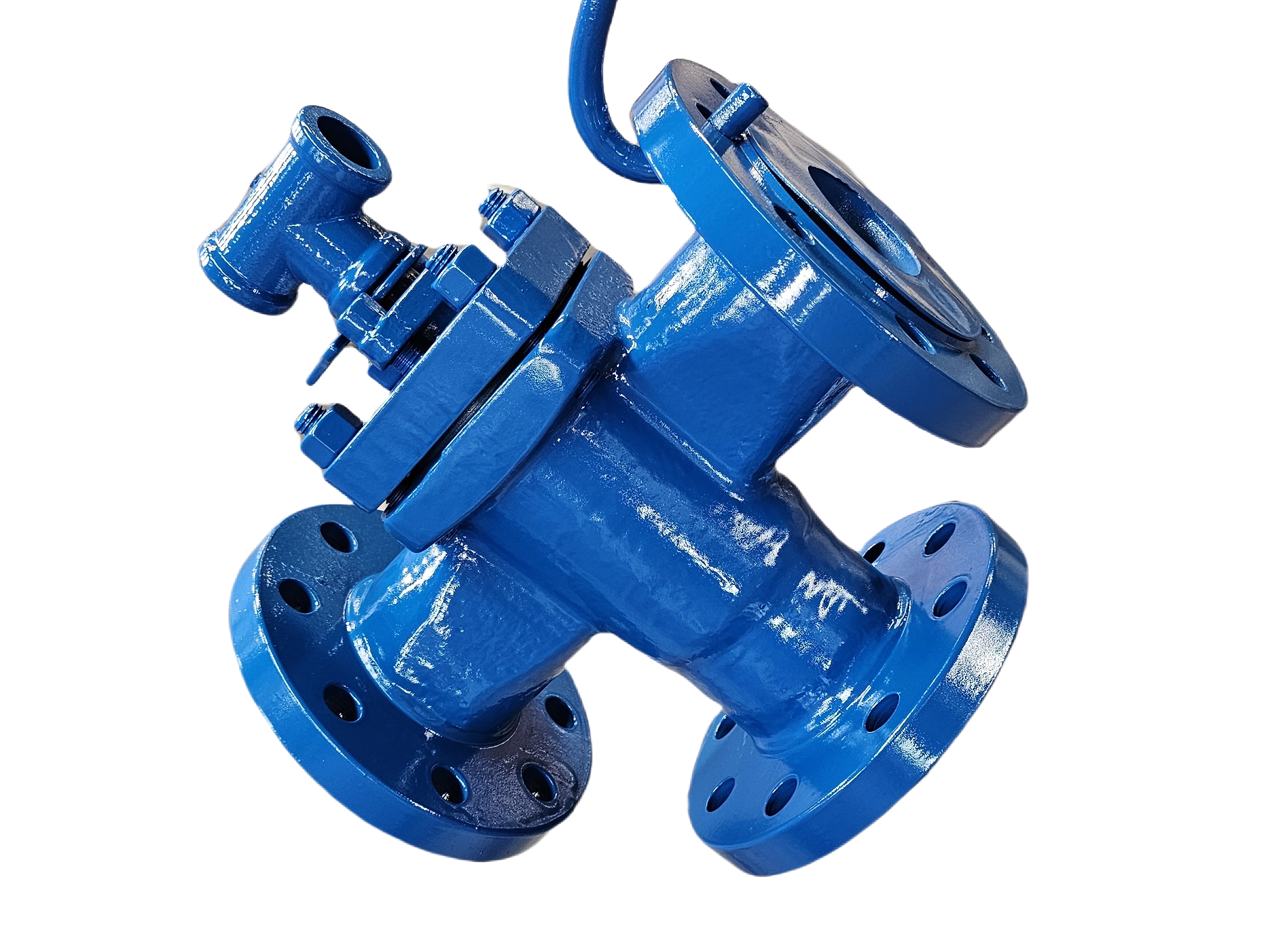
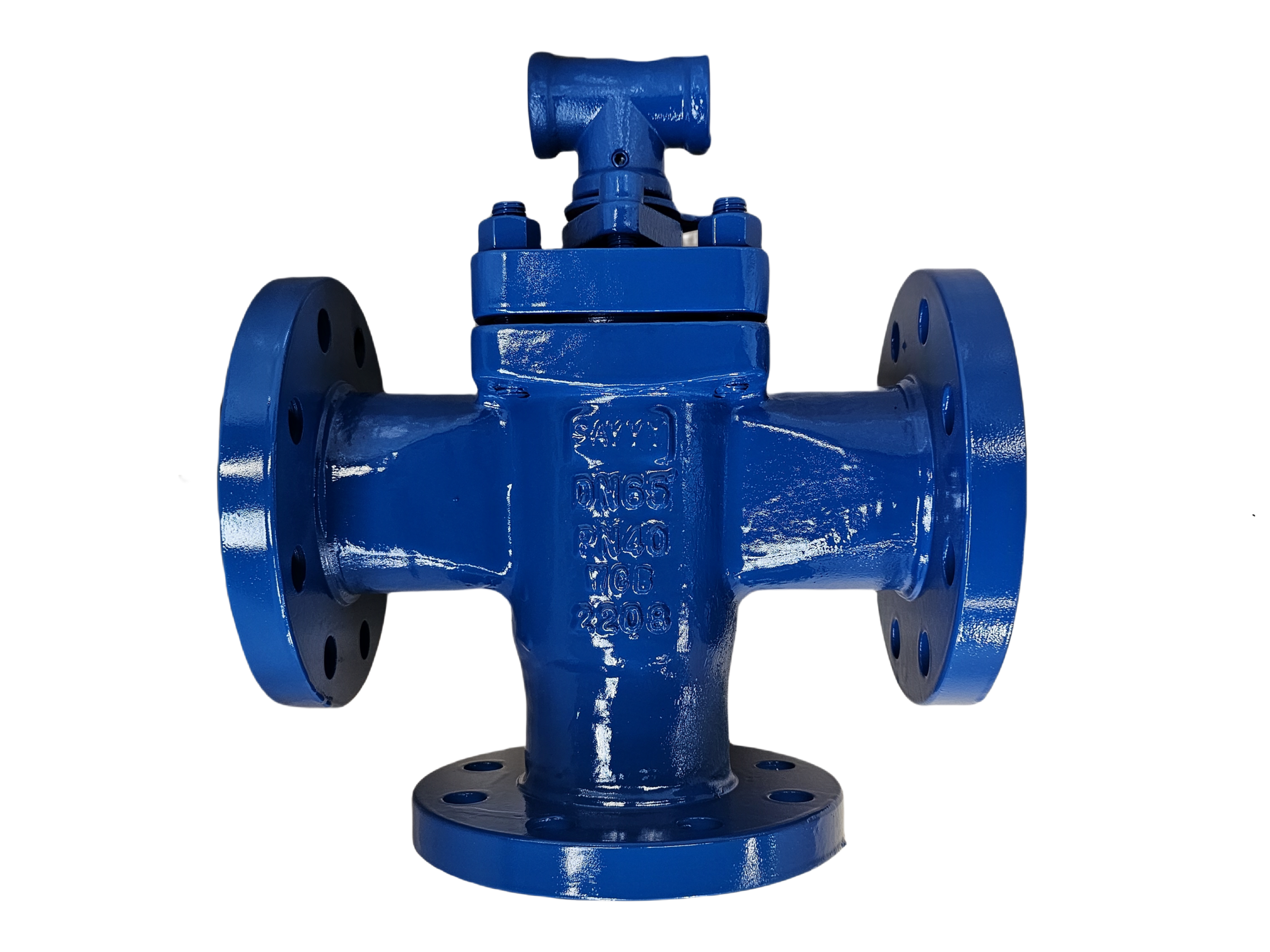
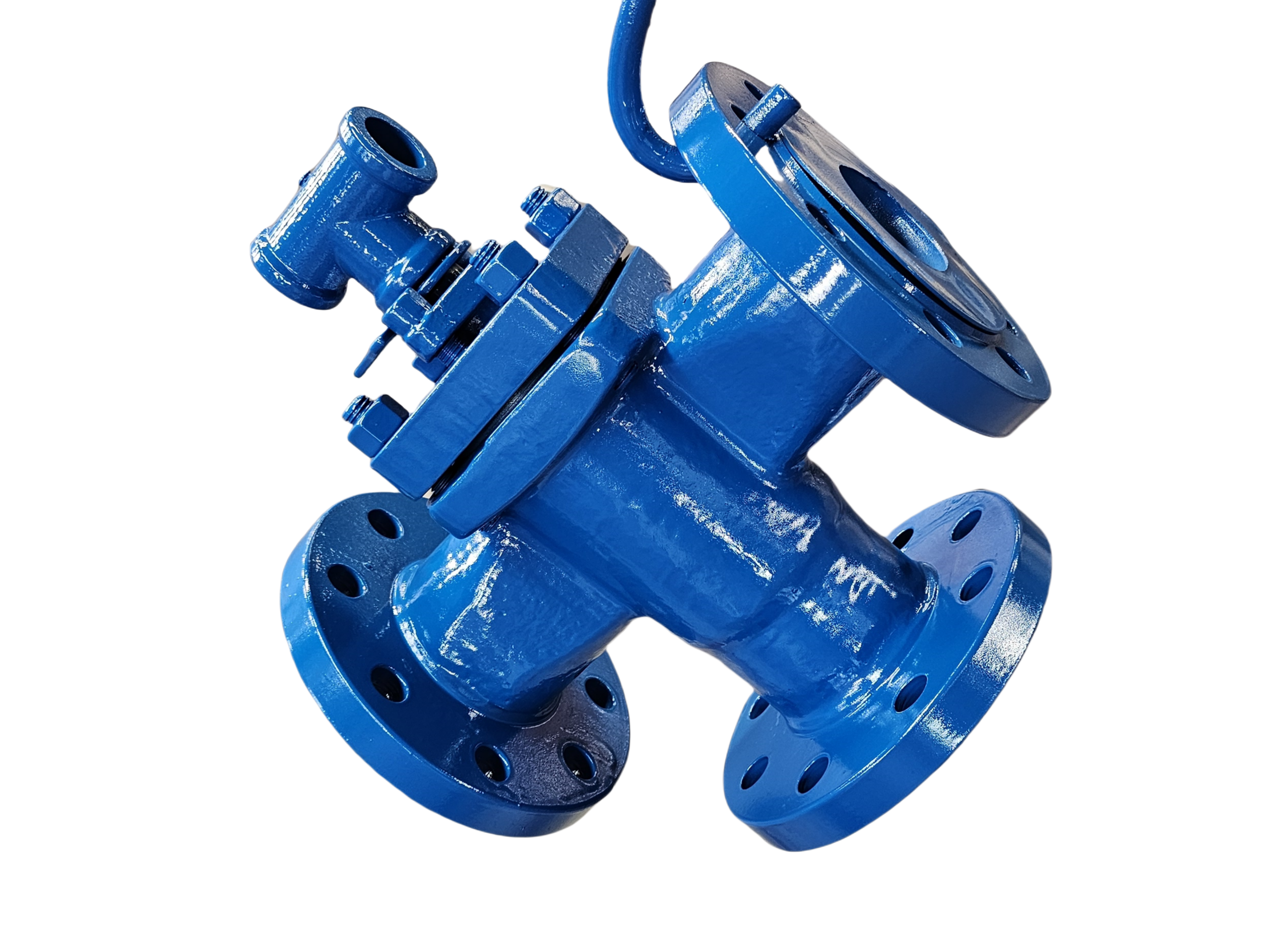
3-Way Lubricated Plug Valve—PN40
Description
Technical Data Sheet
3-Way Lubricated Plug Valve – Cast Body
Pressure Rating: PN40
Port Configuration: 3-Way (L-Port or T-Port)
1. General Description
This is a three-way, lubricated plug valve with a cast body and bonnet, designed for diverting, combining, or shutoff of flow in pipelines. The valve uses a tapered plug which is jacked or sealed by injecting a high-viscosity sealant (lubricant) into grooves on the plug face. This lubrication system reduces operating torque, ensures bubble-tight shutoff, and protects the seating surfaces from corrosion and wear. The three-way design can be configured with an L-port for 90° flow diversion between two ports, or a T-port for flow splitting/combining and straight-through flow. It is widely used in oil & gas, refining, chemical, and general industrial applications. Flanged ends are available to EN 1092-1 PN40 with raised face; other flange standards on request.
2. Design Codes & Standards
Item Applicable Standard
Design & Manufacture API 599, API 6D (applicable features), BS 5353
Pressure-Temperature Rating ASME B16.34 (interpolated for PN40) / EN 12516
Flanged Ends EN 1092-1 (Type 11, B1 / RF)
Face-to-Face / End-to-End Manufacturer’s standard / ISO 5752 (basic series)
Inspection & Testing API 598, API 599
Fire-Safe (Optional) API 607 / ISO 10497
Fugitive Emissions (Optional) ISO 15848-1
Casting Standard EN 10213 / ASTM applicable
3. Main Technical Specifications
Size Range: 1/2″ to 24″ (DN15 – DN600)
Pressure Rating: PN40 (40 bar CWP at ambient)
Port Configuration: 3-Way – L-Port or T-Port (90° or 180° rotation variants)
Bore: Full Bore (standard) / Reduced Bore (optional)
End Connections: Flanged EN 1092-1 PN40 RF, Butt-Weld (BW), or combinations
Body / Bonnet Material (Cast):
Carbon Steel: ASTM A216 WCB, GP240GH (EN 10213)
Low-Temp Carbon Steel: ASTM A352 LCB / LCC
Stainless Steel: ASTM A351 CF8 / CF8M, 1.4408
Duplex / Super Duplex: A890 Gr.4A, 1.4469
Other alloys upon request
Plug Material: A105 / WCB with hard chrome plating, nitriding, or Stellite overlay; Stainless Steel 316, 1.4462, or equivalent
Seating: Metal-to-metal with lubricant injection grooves. Sealant system includes injector fittings and check valves.
Sealant / Lubricant: Synthetic high-temperature grease or PTFE-based; can be injected under line pressure via a stick lubricant or a pump.
Stem Material: 13Cr, 17-4PH, SS316, Duplex
Packing: PTFE, Graphite, or PTFE/Graphite combination
Operation: Wrench (up to DN150/6″), Gear Operator (from DN200/8″), Pneumatic/Electric/Hydraulic actuators with ISO 5211 mounting
Design Features:
Tapered plug design with jacking bolt to adjust sealing
External lubrication system with injection fittings
Metal seated with emergency sealant capability
Blow-out proof stem
Antistatic device (if specified)
Cavity pressure relief (if required)
Capable of bidirectional flow and true double block and bleed (with T-port and vents)
4. Materials of Major Parts (Typical: WCB / Steel Internals)
No. Part Name Carbon Steel Option Stainless Steel Option Standard
1 Body A216 WCB A351 CF8M ASTM A216 / A351
2 Bonnet A216 WCB A351 CF8M ASTM A216 / A351
3 Plug A105 + Chromium Plated A182 F316 + Chromium Plated ASTM A105 / A182
4 Stem A276 410 / 17-4PH A182 F316 / 17-4PH ASTM A276 / A182
5 Stem Packing PTFE / Graphite PTFE / Graphite —
6 Gasket (Body-Bonnet) 304+Graphite Spiral Wound 316L+Graphite Spiral Wound ASME B16.20
7 Sealant Injection Fitting Carbon Steel with ball check SS316 with ball check —
8 Stud / Bolt A193 B7 A193 B8M ASTM A193
9 Nut A194 2H A194 8M ASTM A194
10 Gear Operator (if applicable) Ductile Iron / Carbon Steel Ductile Iron / Carbon Steel ISO 5211
Note: The plug and body seat are typically matched and lapped for optimal sealing. Lubrication system can be manual stick or automatic pump.
5. Performance Testing & Inspection
Shell Test: 1.5 × PN (60 bar), water, per API 598, no leakage.
Seat Test (High Pressure): 1.1 × PN (44 bar), water, zero leakage per API 599.
Low-Pressure Seat Test: 0.6 bar pneumatic, zero leakage (metal seated plug tolerance as per API 598).
Sealant System Test: Verify all injection fittings and check valves operate and retain pressure.
Fire-Safe Test (Optional): Per API 607 / ISO 10497, with metal backup seats ensuring sealing after burn.
Material Certification: EN 10204 Type 3.1 certificates for body casting, plug, stem, and bolting.
Visual & Dimensional: 100% casting inspection (PT, UT per spec), dimension check to approved drawings.
6. Installation & Maintenance Tips
Port Configuration: L-port and T-port must be correctly specified for the intended flow path. T-port is often used for bypass, blending, or diverting. L-port for directional change.
Lubrication: Before operation, inject the correct grade of sealant into the plug face. Regular sealant injection flushes contaminants and renews sealing surface. Follow the lubricant manufacturer’s temperature range.
Seat Adjustment: The plug is adjusted by a jacking bolt at the bottom of the valve. Do not overtighten; adjust only when leakage is observed and after injecting fresh sealant.
Operation: The valve should be cycled fully during lubricant injection to distribute sealant evenly. For metal seated plugs, the operating torque can be higher than soft-seated valves; use adequate gearing.
Vents/Drains: If the body has cavity pressure relief, ensure it is correctly oriented and piped away safely.
Maintenance: Periodically check the sealant supply, packing condition, and stem lubrication. The tapered plug may require re-lapping after long service; consult manufacturer for field reconditioning.
This technical data sheet is for product selection and general guidance. Specific dimensions, weights, Cv values, and material certifications are provided in order-specific approved drawings. The manufacturer reserves the right to change designs and materials without prior notice.