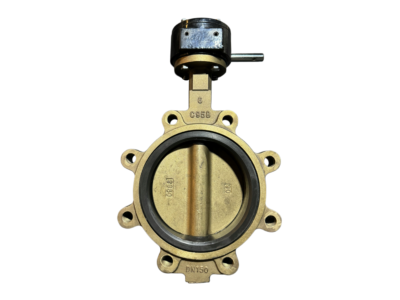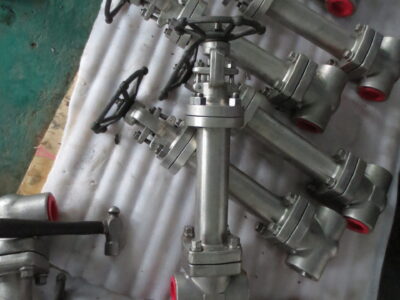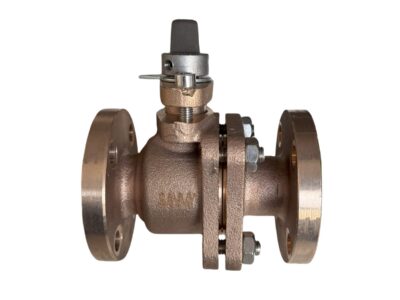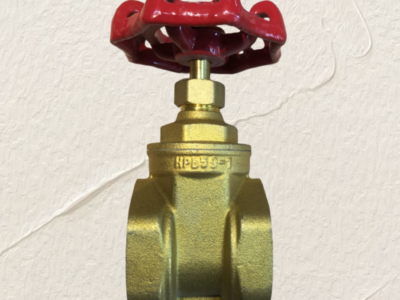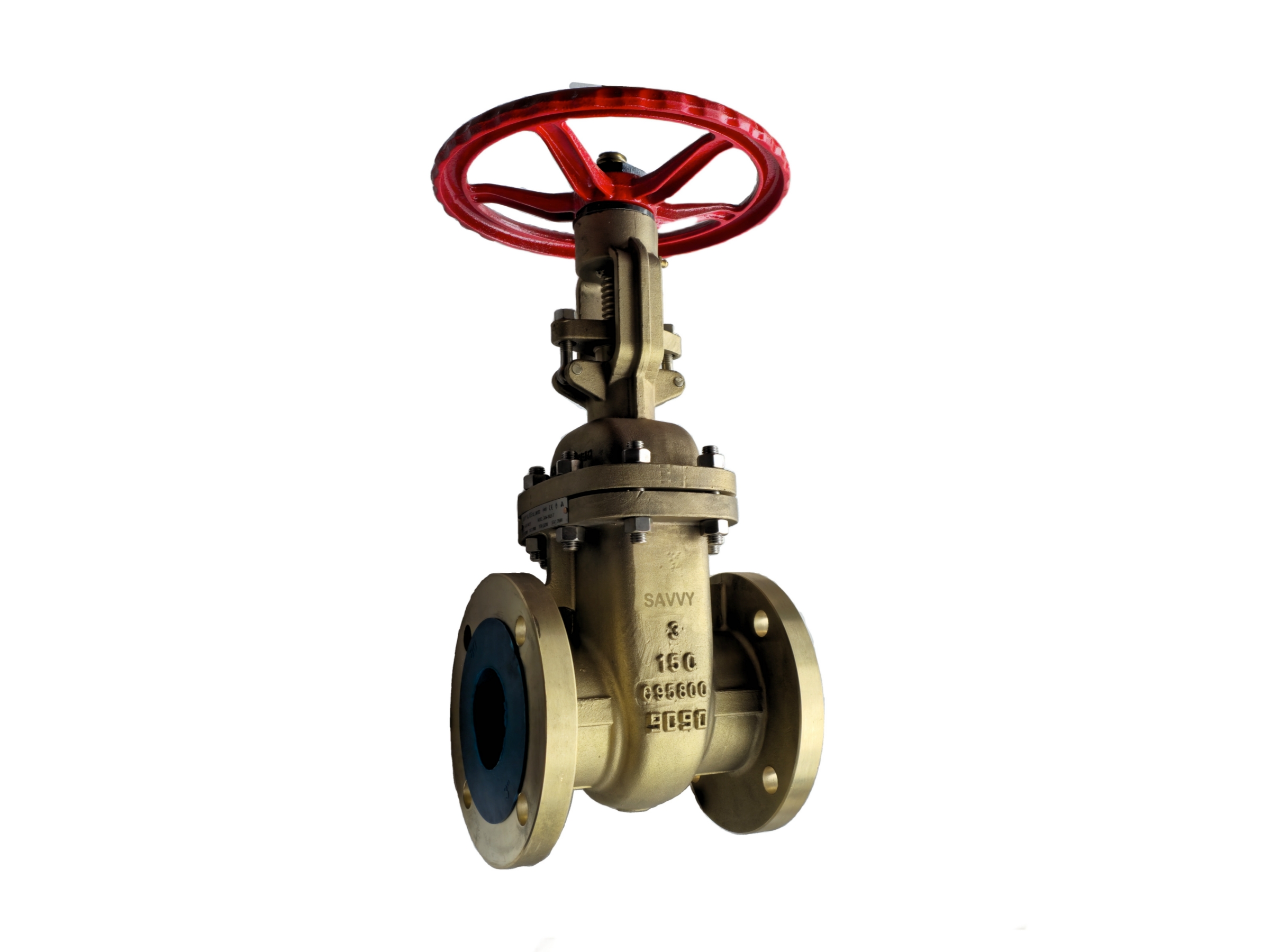
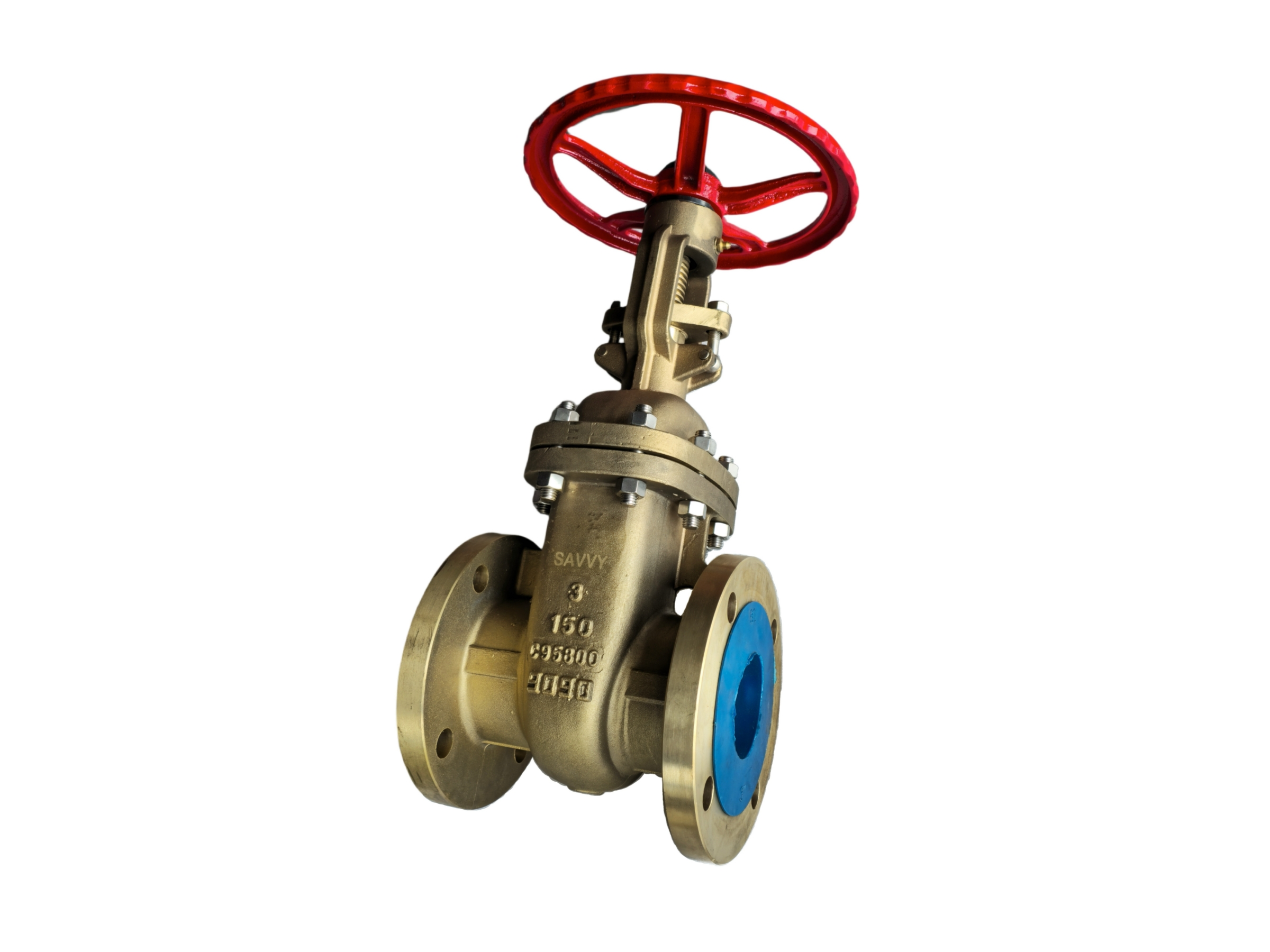
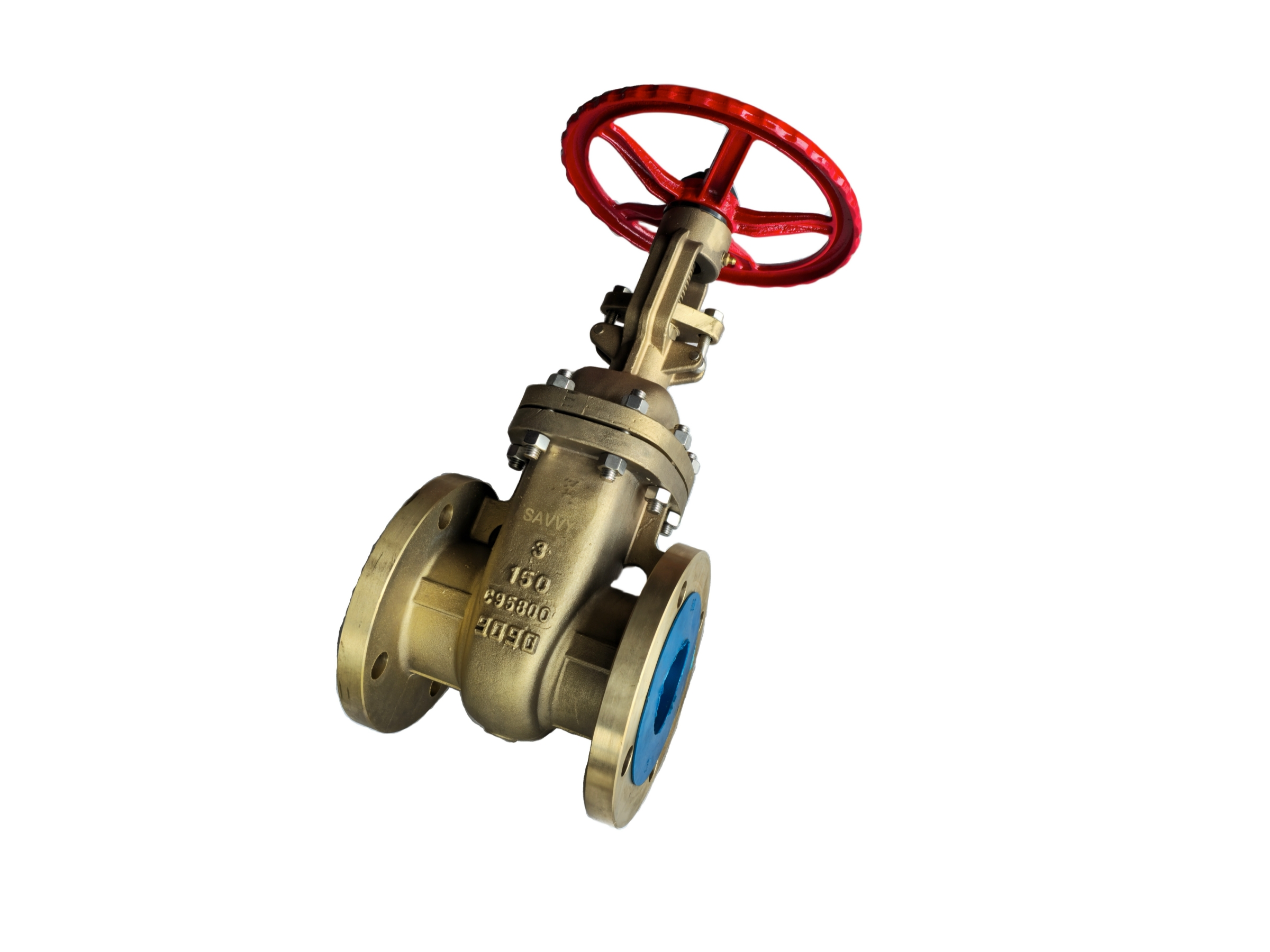
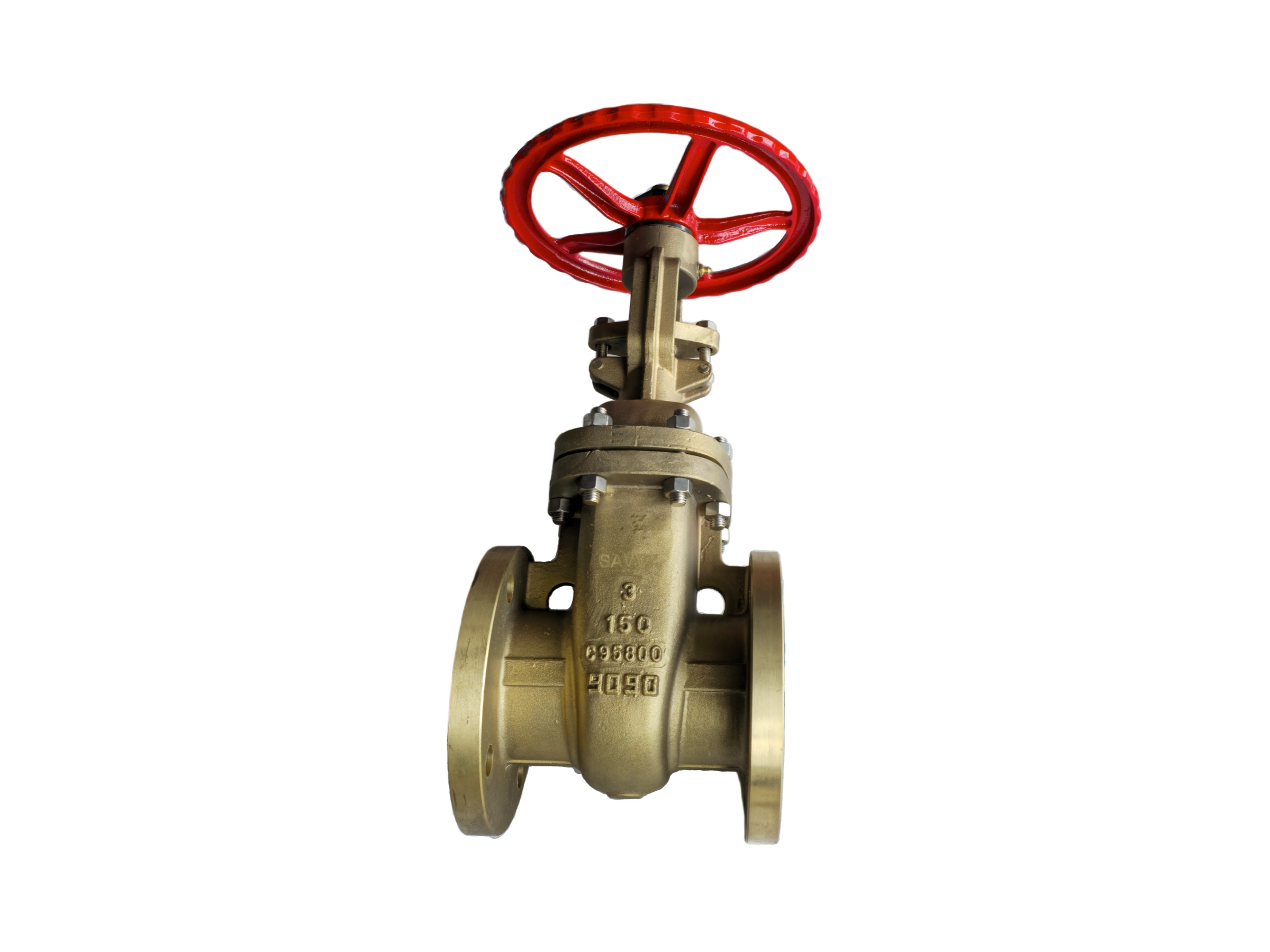
B148 C95800 AL-Bronze Gate Valves
Description
ASTM B148 C95800 Aluminum Bronze Gate Valves
Technical Data Sheet
1. Product Overview and Applications
ASTM B148 C95800 aluminum bronze gate valves are engineered specifically to withstand highly corrosive and severe abrasive service conditions. The core material, C95800 (nickel-aluminum bronze), exhibits exceptional resistance to seawater, concentrated brines, sulfate solutions, and a wide range of chloride-containing media. It is particularly outstanding in resisting cavitation corrosion and erosion-corrosion.
Typical Industries: Marine engineering, shipbuilding, seawater desalination, offshore oil & gas platforms, chemical processing, coastal power plants, etc.
Common Systems: Frequently specified for firefighting, ballast control, cooling water, and seawater injection critical piping systems.
Suitable Media: Seawater, sewage, non-oxidizing acids, alkaline solutions, and various organic compounds.
Operational Note: This gate valve is designed for fully open or fully closed on/off isolation service. It is not intended for throttling or flow regulation. In a partially open position, high-velocity media can cause gate vibration and damage sealing surfaces.
2. Technical Specifications and Design Standards
These gate valves are designed and manufactured in accordance with prevailing industry standards to ensure reliability and interchangeability.
Design & Manufacturing Standards: API 600, ASME B16.34
Valve Type: Typically Outside Screw and Yoke (OS&Y) with bolted bonnet, or pressure-seal bonnet design; fitted with a flexible or solid wedge gate.
Nominal Size (DN): 2 inches through 64 inches (DN50 – DN1600) and larger, to meet diverse project requirements.
Pressure Class: Class 150 LB through Class 2500 LB, covering medium to ultra-high pressure applications.
Temperature Range: Typically -29°C to +200°C (-20°F to +392°F), but specialized designs may extend the range from -196°C up to +650°C. Always consult the manufacturer for your specific operating conditions.
Flange Connection Standard: Flange drilling generally conforms to ASME B16.5 or EN 1092-2.
Testing & Inspection: Products are strictly pressure-tested in accordance with API 598 and other relevant standards.
3. Core Material: ASTM B148 C95800
The unique properties of C95800 derive from its precise chemical composition and mechanical characteristics.
3.1 Chemical Composition (Weight %)
Element Content (%) Remarks
Copper (Cu) ≥79.0 Remainder
Aluminum (Al) 8.5 – 9.5 Forms a dense, protective oxide film for corrosion resistance
Nickel (Ni) 4.0 – 5.0 Enhances corrosion resistance and strength; includes Cobalt
Iron (Fe) 3.5 – 4.5 Refines grain structure, increasing strength and wear resistance
Manganese (Mn) 0.8 – 1.5 Deoxidizer; improves hot working properties
Lead (Pb) ≤ 0.03 (Impurity) Detrimental to hot workability; strictly controlled
Silicon (Si) ≤ 0.10 (Impurity) Excessive levels reduce ductility
3.2 Mechanical & Physical Properties (Typical Values)
Property Typical Value (Standard Requirement)
Tensile Strength ≥ 585 MPa (85 ksi)
Yield Strength ≥ 240 MPa (35 ksi)
Elongation ≥ 15% (in 2-inch gauge length)
Brinell Hardness (BHN) 159 (As-cast, typical)
Density 8.8 – 8.94 g/cm³
Modulus of Elasticity 117 GPa
4. Principal Component Materials
The correct combination of materials is critical for overall valve performance and service life.
Component Material Grade Standard / Remarks
Body / Bonnet ASTM B148 C95800 Parent material, high-corrosion-resistant nickel-aluminum bronze
Wedge / Gate ASTM B148 C95800 Matched with body material to ensure compatibility
Seat Rings ASTM B148 C95800 Renewable seat ring construction can be provided
Stem ASTM B124 / B283 C63000 High-strength aluminum nickel bronze with good corrosion resistance
Stem Nut ASTM B505 C93200 High-leaded tin bronze, providing excellent anti-friction characteristics
Packing Flexible Graphite Reliable sealing with resistance to high temperature and pressure
5. Testing and Inspection Specifications
Every valve passes the following tests before shipment to verify its integrity and tightness.
Test Item Applicable Standard Test Requirement
Shell Strength Test API 598 Test pressure is 1.5 times the rated working pressure; no visible leakage or structural damage permitted
Seat Leak Tightness Test API 598 Test pressure is 1.1 times the rated working pressure; leakage rate must comply with the specified class
Optional Tests Nitrogen gas seat test, high-pressure gas test, fugitive emissions testing (e.g., ISO 15848-1) Available upon customer request or for specific service conditions
6. Operation and Maintenance Guide
To ensure long-term stable operation, please adhere to the following precautions:
Installation Orientation: The stem should ideally be oriented vertically upward to prevent debris accumulation in the body cavity bottom.
Operating Mode: For large bore or high differential pressure valves, a gear operator is recommended to reduce the required rim pull torque.
Operating Torque: Never use cheater bars or other extended leverage to force operation. If the handwheel cannot be turned easily, inspect the valve internals for trapped foreign material or mechanical obstruction.
Temperature Limit: For compact designs with threaded-in bonnets, severe thermal cycling exceeding 120°C (250°F) should be avoided to prevent leakage caused by differential thermal expansion.
Maintenance Essentials: Periodically check the stuffing box. Minor leakage can often be addressed by evenly tightening the packing gland nuts. Before performing any maintenance, fully isolate the valve body from the pipeline and depressurize it. Prior to reassembling the bonnet, clean all sealing faces and renew the gasket/sealant to ensure a tight joint.